Blog
 Bruxism is characterized by the clenching and grinding of your teeth, typically while you sleep. Not only can bruxism, which is reported to affect 10 percent of adults and 15 perfect of children, cause headaches, disruption to your sleep cycles, and jaw problems, but it can also cause lasting damage to your smile in the way of chipped and fractured teeth, and worn tooth enamel. Although it is difficult to pinpoint, stress, anxiety, sleep disorders, and the consumption of alcohol and tobacco use are common links to teeth grinding.
What Can I Do if I Grind My Teeth?
There is no cure or prevention for teeth grinding. Since teeth grinding is associated with stress and anxiety, reducing those feelings may help with the relief of your migraines, although this is not guaranteed. If you suspect or know, that you grind your teeth when you sleep, the best option is to invest in a night guard to protect your smile and ensure a restful night’s sleep.
Where Can I Get a Nightguard?
Nightguards can be found everywhere from the internet to your local drug store. While these night guards can be effective in the immediate sense, these guards can prove to be counterproductive because they are essentially a one-size-fits-all model. As you would expect, your smile is unique to you, and you may find that not only are these store-bought guards uncomfortable, but they can also shift your teeth, creating more issues down the line.
Ideally, your night guard should come from your dentist. A night guard can be made from the mold of your teeth, ensuring that it will not only be comfortable to wear, but it will also provide the safe and reliable protection that you and your smile needs. Nightguards are durable, long lasting, and a cost-effective way to guard your teeth against future damage, while also reducing headaches. Although store-bought night guards may seem to be a more convenient and cheaper option initially, imagine the possible future costs of dental work and the disruptions that an uncomfortable mouth guard can have on your sleep.
 Do you love your smile, or do you tend to hide it? Aesthetic problems such as chips, cracks, and gaps could be the reason you stay tight-lipped for photographs. Luckily, bonding and attaching porcelain veneers can help you restore a beautiful, natural-looking smile free of cracks, chips, and gaps. One of these techniques could be the perfect way to correct and enhance your smile.
Porcelain Veneers
Porcelain veneers can correct the appearance of teeth that are chipped, cracked, gapped, discolored, crooked, or even missing. Veneers are thin sheets of white porcelain that are cemented to the front of the teeth to improve their appearance and function.
The Procedure
To attach a veneer, your dentist will first shave off a thin layer of enamel and take a mold of your teeth so that customized veneers can be made. Next, you will be fitted with temporary veneers while the permanent veneers are being fabricated. Just two or three weeks later, your personalized veneers will be permanently cemented to your teeth. However, depending on the situation, sometimes the veneers are made in the office and can be ready the same day.
Advantages and Disadvantages
The most significant advantage of porcelain veneers is that they have versatile uses and can improve a variety of cosmetic complaints. For example, if your teeth are discolored in addition to being chipped or cracked, veneers can resolve both problems simultaneously. They can also be designed to match your surrounding teeth perfectly. However, due to the process of shaving your teeth, veneers are permanent. The procedure must also be performed in two stages. Although the process does not need anesthesia, it often times requires numbing. The results are immediate and long lasting. On average, veneers may need to be replaced after 10 to 15 years (they last at least two or three times longer than bonding).
Bonding
Tooth bonding corrects the appearance of chips, cracks, or gaps using tooth-colored composite resin materials. The composite resin is hardened to the tooth’s surface and can be used to improve the appearance of teeth and to repair or protect teeth.
The Procedure
For this procedure, your dentist will apply a natural, tooth-colored composite resin to your teeth. First, a gentle acid solution will be applied to your teeth to prepare them for the bonding material. A liquid bonding will then be molded to the tooth to fit the desired shape. Finally, an ultraviolet light will be placed to harden the resin until it is cemented to your tooth.
Advantages and Disadvantages
While veneers require two office visits, bonding can usually be accomplished in a single visit. The procedure is quick and comfortable. However, bonding is more limited in its uses. Additionally, the bonding material may need to be replaced after three to five years, which is typically sooner than necessary with veneers. Nonetheless, bonding does have the ability to correct cosmetic issues such as gaps, cracks, and chips, and it can repair or protect damaged or vulnerable teeth.
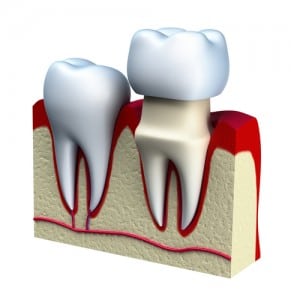 Dental crowns are placed over damaged, weak, fractured, or otherwise dysfunctional teeth to improve their function, alignment, shape, or appearance. Even though they are cemented on, a crown may occasionally fall off of the tooth. If your dental crown falls off, you need to make a dental appointment as soon as you can. Dr. Tomazin offers same-day crowns for your convenience and can replace your broken or loose crown in just one office visit.
Why Dental Crowns Might Fall Off
A dental crown might fall off for a few reasons. One of these is due to tooth decay beneath the crown that destroys part of the tooth so that the crown no longer fits tightly onto the tooth. Another reason is if the cement bonding holding your crown to your tooth isn’t strong enough. One of the most common reasons a dental crown might fall off is due to abuse. If you grind your teeth, use them as tools, subject your crown to unnatural stress or force, or eat too many hard or sticky foods, you can weaken or break a dental crown.
Contact Your Dentist
Losing a dental crown is rarely an emergency that requires immediate rectification. Still, it should be corrected as soon as possible. The newly exposed tooth may be weak and sensitive to temperature, friction, pressure, or air. Contact your dentist and let him or her know what happened, then schedule the next available appointment to go in and have the crown replaced. In the meantime, you can use dental cement to protect your tooth or temporarily seal the old crown on it until you see your dentist. This temporary “solution” should only be used for a short while until you can get a crown replacement.
Same-Day Crowns With Dr. Tomazin
Dr. Tomazin uses CEREC 3D technology to fabricate same-day dental crowns. Often with traditional crown replacement, a new crown must be made to ensure that it fits securely over the tooth. Thus, a temporary crown is placed at your first appointment, and the new crown is fitted at a later date. But with CEREC 3D technology, if your crown falls off, Dr. Tomazin can replace your crown the same day you come in for your first appointment.
For your same-day crown appointment, the area will be numbed, your tooth will be prepared, and the CEREC will take a digital impression. This impression will be transferred to a software program where Dr. Tomazin will design the new dental crown on the spot. The milling unit will fabricate the newly designed crown while you wait. Then the crown will be bonded to the prepared tooth, fully restoring your crown. Dr. Tomazin can fix broken teeth and old silver fillings in one visit with tooth-colored porcelain crowns to restore the appearance and function of your smile.
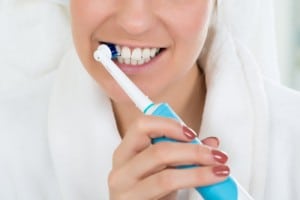 Children are taught from a young age to brush their teeth every morning and night. It is well-established that brushing, flossing, and oral hygiene are vital to dental health. One of the best ways to ensure that you have clean and plaque-free teeth is to use an electric toothbrush. Electric toothbrushes are better for your teeth than manual brushes and can more effectively get rid of dental plaque.
What Makes Electric Toothbrushes Better?
Electric toothbrushes are better than manual toothbrushes because they are more efficient in cleaning the surface areas of your teeth while guiding the pressure we apply. When brushing our teeth, many of us tend toward laziness, and either don’t get in and around every tooth or don’t brush for a full two to three minutes. An electric toothbrush can clean more teeth in a faster period of time, helping you cover more ground. This results in cleaner teeth and less plaque.
What Does the Research Say?
A wealth of studies show that electric toothbrushes tend to remove more plaque than manual toothbrushes. Electric toothbrushes also lower the risk of gum disease, reduce existing gingivitis, and may be safer and softer on the gums than many manual toothbrushes. Power toothbrushes are proven to remove stains and whiten teeth more effectively than manual toothbrushes. Furthermore, research has established that the improved cleaning ability of electric toothbrushes encourages continued use, meaning patients are more likely to continue using an electric toothbrush once they have seen the benefits for their teeth.
Who Can Benefit From Electric Toothbrushes?
Everyone can benefit from electric toothbrushes, especially those who are lazy or inefficient brushers. Your dentist may recommend an electric toothbrush if your current efforts aren’t removing enough plaque. People that may find electric toothbrushes especially useful include children, people with braces or dental implants, and individuals who have trouble using their hands. Studies have suggested that patients who use power toothbrushes appreciate their results and tend to continue using them long term, which contributes to better dental health in the future.
Dr. Chad Tomazin, DDS and our team are focused on helping you achieve the best oral health. We carry high-quality electric toothbrushes designed to create healthy hygiene habits that will improve your dental health. For more information, contact us at (951) 686-3666 or through our online contact form today.
Some people experience anxiety and fear when visiting the dentist. To make the experience of caring for your teeth as pleasant for you as possible, we offer sedation dentistry. Dr. Tomazin is a dental anesthesiologist and can use anesthesia to help nervous adults, children, or patients with special needs be more comfortable during their dental visit.
Why We Offer Sedation Dentistry
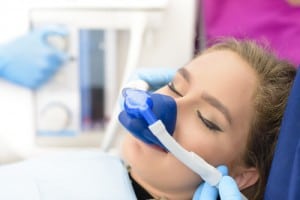 Dr. Tomazin is a deeply caring dentist who makes every effort to provide the best dental care experience for his patients. However, some people still feel anxious or scared about going to the dentist. Children may become uncooperative and restless in the dentist’s chair. Individuals with certain health problems such as heart troubles, gag-reflex, and disabilities may require sedation for safety. A previously unpleasant dental visit can affect individuals so strongly that they may avoid the dentist altogether, and the resulting lack of regular checkups can lead to tooth decay and permanent tooth loss.
To assuage these problems, we offer sedation dental services. Sedation dentistry allows vulnerable individuals to get the dental care they need without the apprehension or fear. Various treatment modalities offered by our expert dental anesthesiologist, Dr. Chad Tomazin, help patients feel comfortable and allow the dental treatments to proceed as smoothly as possible. With sedation dentistry, patients who have previously been unable or unwilling to go to the dentist as frequently as they need to can receive the necessary dental treatments that will help prevent tooth decay and other dental problems.
Our Sedation and Anesthesia Services
We offer a variety of sedation and anesthesia services to accommodate every patient’s needs. In addition to local anesthesia and oral sedation, we offer intravenous sedation to help patients relax more deeply. Our sedation treatments range from minimal (aware but relaxed) to deep sedation (not easily aroused). We also offer general anesthesia so that the patient can be completely unconscious and unresponsive for the duration of the procedure. The patient is carefully monitored while under any of these forms of sedation and anesthesia. Dr. Tomazin finds sedation dentistry to be incredibly beneficial for many patients. Thanks to sedation dentistry, all interested patients—even those who dread going to the dentist—can receive dental treatment in a relaxed or sedated state.
Sedation dentistry can help you or a loved one have a more positive experience when visiting the dentist. To learn about sedation dentistry with our dentist and dental anesthesiologist, Dr. Chad Tomazin, schedule your appointment by calling (951) 686-3666 or by completing our online contact form today.